Gossamer Tapestry

Reflections on conservation, butterflies, and ecology in the nation's heartland

Monday, June 21, 2010

Indiana Trek


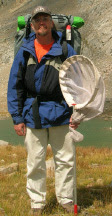
Kirk guides us through Swamp Metalmark habitat at Clover Lick Creek

Earlier this spring the Nature Museum's Butterfly Restoration Project and Susan Borkin of the Milwaukee Public Museum were awarded a small grant from the Butterfly Conservation Initiative. This grant would allow us to visit a population of Swamp Metalmark Butterflies in extreme southern Indiana. The population was reported to be very large. The purpose of our trip was to verify the existence and size of the population, to evaluate the habitat at this site, and to clip small fragments from the wings of a sample of metalmarks for DNA analysis. We would also collect a female to bring back to Chicago for some further experiments on breeding the species in the lab.


Looking for Metalmarks

We were guided in our efforts by Kirk and Jason from the US Forest Service. I don't know what we would have done without them. They guided us right to the appropriate spots, and offered valuable insights into ecological changes (mostly brush advancement).


Male Swamp Metalmark

We were to visits two sites about a half hour apart. At Boone Creek, we found metalmarks almost immediately. They were present in small numbers- we only found about a dozen individuals. We hoped we would do better at Clover Lick, which was reported to have a larger population. In that, we were a bit disappointed. All told, we only found 4 individauls at Clover Lick, and these were scattered over a wide area.

This shows a tiny part of a huge number of butterflies we saw
puddling in a dry stream bed

We were lucky to have gorgeous weather during our visit. The number of butterflies that we saw was amazing- every butterfly milkweed that we came upon was covered with a half dozen swallowtails or Great Spangled Fritillaires. I got lots of nice photos.


Great Spangled Fritillary

The habitat assessment was revealing. Both the butterflies and their host plants appeared to prever edges between open fields and woodland. In these areas, the host plants were in shade for part of the day. We collected data on host plant density, canopy height, as well as population size for the swamp metalmark. I was able to get DNA samples, though not so many as I had hoped for.


Harvesting DNA Fragments

All told, it was a very successful venture. We got lots of environmental data, and now have a single female set up for egg laying in our lab. The population is almost certainly a lot smaller than we expected. That's a disappointment, but it's still very important to know.

Labels: , ,

Friday, October 16, 2009

Metalmark Mania


Long-time readers know that I've been blunting my sword on attempts to breed the endangered Swamp Metalmark in the lab for quite some time now. We're trying again, though I have no idea how it will work. We were very successful in getting eggs this season. Our 3 females yielded over 325 eggs. That's more than twice as many as we have ever gotten before. We reared them through the end of the summer, and experienced a fair bit of attrition. Sadly, that's nothing new.


Larvae usually grow to about 5 mm in length before they begin hibernation. A few weeks back, we began transferring them outdoors, to potted host plants that we had enclosed in cages. In the picture above, you can see two variations on this method that we are trying. Some of the larvae are on plants are in a sunken tub, others on plants in a pot that's in a mesh bag. At this point, about all we can do is sprinkle some Parmesan before the altar of the FSM and hope for the best.


When we were transferring the larvae outside, we missed a few. Eleven larvae went on to pupate. That's OK. Last year we got a bunch of adults and failed to get any mating. Even playing Barry White didn't help. We got a moderate amount of egg laying, but all of the eggs were infertile. This year, we will use this opportunity to try a couple of other tricks to achieve mating in captivity. No, we won't use scented candles, but we are going to use a more ventilated cage and increase airflow to stir the pheromones up a bit better. We'll also cage the males alone for a few days before we introduce females to the cage.


Today the first adult emerged. It's a male. This isn't surprising, males usually emerge a bit before the females. Alright mister, you know what's expected of you.

Labels: , ,

Thursday, August 20, 2009

A Whole Lot of Butterfly Conservation


I suppose that after getting the new lab facility for butterfly breeding there's really no excuse for not breeding lots of rare butterflies. That has been happening all summer long, and I'm pretty pleased with the results.


Here Vincent and Jay are feeding silver-bordered fritillary caterpillars. This year, over 1,300 of them hatched from eggs that we collected in the lab. They are starting to pupate now. We will be trying to start a new population of this species up in McHenry County. Assuming we get the final permit, we will be trying to start a second population on a prairie restoration project in southwest Cook County. There are only two large populations of this species left in Illinois


Cages with silver-bordered fritillary larvae feeding on violet leaves


Gorgone Checkerspot Caterpillars Heading in to Hibernation

We're growing two types of checkerspot butterflies this year: the Gorgone Checkerspot and the Baltimore Checkerspot. Both species spend the winter as caterpillars. We have 555 Gorgone Checkerspot caterpillars and 1758 Baltimore Checkerspot caterpillars. The caterpillars have stopped eating and are preparing to hibernate. Most of them will spend the winter on the museum roof. Next week, we will be releasing a bunch of the Baltimore Checkerspot caterpillars to let them spend the winter in the wild. We are using them to create a new population on the grounds of the Fermi National Accelerator Laboratory.


Long time readers will know that the most seriously imperiled species that we are working with is a little butterfly called the Swamp Metalmark. It's at significant risk of becoming extinct within my lifetime. We have struggled trying to breed enough in the lab to start a new population here in Illinois where it went extinct in the 1980s. The female in the cup above has been laying eggs for nearly a month now. We have a record 300+ caterpillars. The most that we have ever had prior to this year is 140. I will be holding my breath until we can get a lot of adults out of this species.


Swamp Metalmark

In general, I'm really pleased with our progress this year. For those of you keeping a tally, we have been working with 3,852 caterpillars so far this summer. We have had only one significant failure. In late June I stayed up until 3:00 AM collecting females of a rare prairie moth. It's a species we have never worked with before- and we got zero eggs (but at least we learned how not to collect eggs from this species). The fun isn't over. The first week in September, we will be collecting female regal fritillaries and trying to carry caterpillars from that species over the winter.


Regal Fritillary (photo: Ron Panzer)

Labels: , , ,

Friday, October 24, 2008

SkyWatch - Sunny Side up. Autumn Skies and Eggs


Autumn on the Prairie - Bluff Spring Fen - 12 October 2008


The girls have been busy - Swamp Metalmark Eggs

Current egg count: 165 212 325

More Skywatch at the Usual Spot.


Labels: ,

Thursday, October 16, 2008

Media Madness

The news that I mentioned yesterday has been picked up by the Chicago Tribune. Enjoy the Barry White reference.

Go ahead, Spo. You know you wanna say it.

Update: Now there's video, too.

Labels: ,

Wednesday, October 15, 2008

The Circle Closes


It's a girl! Actually, it's two girls, so far. The Swamp Metalmark project continues to push ever further into uncharted territory. I recently posted the first photos we've ever gotten of the chrysalis of this species. Last week, adult butterflies began emerging. Progress was slow at first, just as pupations were. Things have picked up rapidly this week. We're now up to ten adults. Yesterday the first two females emerged.

Way back last summer, we collected gravid females up in Wisconsin. I have seen a lot of courtship activity in the flight cage, but no actual mating. It is not unusual for us not to observe any mating at all, even when it happens. I'm pretty sure that the female have now mated. We won't know for sure until we get fertile eggs out of them. Still, if my hunch is correct, it means that for the first time ever, we have succeeded in getting the metalmarks to complete a full life cycle in the lab, returning to the stage that we collected in the wild.

There's still lots of work to be done. We hope to get lots and lots of eggs out of these girls, and will rear the larvae in the lab. In about a month, we'll set them outside to overwinter in special cages. I will blog all the gory details.

Side Note: It's not unusual in butterflies to have the males emerge from their chrysalides sooner than the females do. We had eight males emerge before we got a single female. I expect that the last of the adults to emerge in this generation will be similarly skewed towards females. We have a dozen pupae yet to emerge, and more larvae on the way.

Labels: , , ,

Monday, September 29, 2008

Something You've Never Seen Before

Folks who have been reading my blog for a while know of my struggles with trying to rear an endangered species of butterfly called the swamp metalmark. Last year, our lab managed to keep caterpillars alive all winter long. For some reason, they just never wanted to complete their life cycle and died before pupating. To date, I have only succeeded in bringing one male all the way from egg to adult. All but two of my larvae have died prior to pupation.


This year, I decided not to try to fight nature. We collected gravid females in July. We would rear them up until the end of the growing season, then place them outside to overwinter. The day length and cold temperatures would allow their biological clocks to do whatever they needed to, and we'd complete the life cycle next year.


This swamp metalmark caterpillar will pupate in the next day or two.

About a week and a half ago, Vincent informed me that some of the caterpillars were putting on a significant growth spurt. A couple even pupated. As of today, we have a dozen pupae, and the majority of the individuals in the lab will pupate in the next day or two. I have been unable to locate a photo of a pupa of this species. Here is one that I took this morning:


We will do what we can to try to get them to mate in the lab. If they do this, we already know that we can get them to lay eggs in the lab. We will rear them up to their normal stage for diapause (hibernation) and then place them outside. I have no idea what is going to happen here. A lot can still go wrong. The best possible outcome is that we get a significantly expanded number of eggs and larvae to work with. One thing is for sure- I've just about given up trying to anticipate how the species is going to behave.

Labels: , , ,

Wednesday, July 23, 2008

Again with the Swamp Metalmarks?


I’ve been having a lot of field time of late. We currently have six different species of butterflies that we are breeding in the lab as part of our restoration efforts. I just came from the lab and we have tons of egg production from most species.

Colleagues and I ventured up behind the Cheddar Curtain yesterday. Our goal was to get swamp metalmark females for egg laying. I haven’t talked much about the metalmarks lately. They are the most significantly endangered species we are working with. They had been extirpated from Illinois. We now have a tiny restored population here, but it's insufficient to carry the species in Illinois for the long run.


The underside of the metalmark is really hard to photograph, but I wanted to show the beautiful yellow color.

Although we made significant progress last year and over the winter, we were ultimately unsuccessful in our efforts. Thingfish23 recently wondered if I shared my failures on the blog. Yup, I do. This one was particularly painful.


Two tiny larvae from August 2007

The metalmark larvae survived the entire winter, continuing to eat, grow, and shed their skins. Starting in late March, we began to experience larval death. It wasn’t a lot at any one time, but here and there, they would just dwindle in numbers. None of them pupated- it was as if they had simply died of old age. Curious. Somehow, we had failed to provide them with an appropriate environmental cue to complete their development.

This year, we will proceed more carefully. We will pay close attention to photoperiod. We will allow at least part of our larval population to over winter in cages outdoors where they can experience low temperatures. But we are trying again, and that’s where yesterday’s trip came in.


We met Su up at one of the know metalmark sites in east central Wisconsin. Su works for the Milwaukee Public Museum and has been doing swamp metalmark restoration in Wisconsin for some time now. The site is a fen- an alkaline, springy area, with lots of sedges and swamp thistle- the caterpillar food plant. There was also a lot of both poison ivy and poison sumac, which caused me to think of Homer, who, no doubt, is glad he wasn’t with us.


It was dim and cloudy the wole time we were at the site. Hence the really mediocre photos (sorry). In spite of the weather, we were pleased to find a robust population of swamp metalmarks this year. We managed to get four very fat females, who are all now producing lots of eggs. Yay. This is proving to be a difficult species to work with- but, as I have mentioned before, the species is in real trouble. There are now rumblings about gathering additional status information for the species. This may represent the earliest stages of moving towards a federal listing process.

I’m optimistic about the future for this species. I don’t have good reason to be, but I must. I refuse to consider the alternative.

Labels: , ,

Monday, April 14, 2008

Sunshine and Butterflies


Sunrise reflected on Mt. San Jacinto

I've been in Palm Springs since late friday evening. We have spent the weekend with UrSpo and Someone, who journeyed out from Phoenix on Friday. The weekend has involved a lot of relaxation and visiting. Tody we'll go for a hike. I hope to be able to capture a Wright's metalmark butterfly. It's in the same a close relative of the swamp metalmark, but it's a fairly common butterfly in these parts. I want to extract DNA from it and use it forr tthe cross-amplification study that's a part of my paper describing microsatellite DNA characterization from the swamp metalmark.

It's wonderful to be seeing butterflies and other insects out and about, especially given how bad springtime in Chicago has been so far this year. The desert is still in bloom, which makes for some great scenery. It will be interesting to see what other insects are around, as this is my first spring visit to the California desert sine my entomological interests have expanded beyond butterliies. I'll pictures from today's hike.


California Sister (Adelpha bredowii)

Labels: , , , ,

Thursday, February 28, 2008

Swamp Metalmarks and the ESA


Over at Rural Wat, valown has written a series of posts about the Endangered Species Act (ESA). These, and some of the discussion that he and I have had in the comments have prompted me to offer a few of my own thoughts here.

I have been working on restoration of the swamp metalmark butterfly in Illinois for about five years now. This sepcies is neither an endangered species at the federal level, nor a candidate for listing. Should the situation be otherwise? Part of what prompted me to ask this question is some of the language of the ESA as recounted by valown:
(6) The term "endangered species" means any species which is in danger of extinction throughout all or a significant portion of its range...
Let's consider this statement in light of the range of this butterfly


In the states shaded in red, NatureServe has ranked the swamp metalmark as critically imperiled (S1). In the orange states they have ranked it as imperiled (S2). In Iowa, it is listed as historic only (SH - meaning it's now extinct there) . In Missouri, it is listed as vulnerable to exterpation or extinction (S3). Globally, it is also listed as vulnerable (G3). Its global status seems closely tied to it's status in Missouri.

This information alone suggests that this butterfly might qualify as a candidate for the ESA. The states in which it is considered imperiled, critically or otherwise, make up the vast majority of its range. NatureServe's description of this species reads, in part:
There are possibly around 100 occurrences, although substantially fewer have ever been documented and some of these no longer exist. This species exists as mostly isolated, small, remnant colonies with little or no potential for recolonization in most of its range. It is thus expected a lot of occurrences will prove to be non-viable. Outside of the Ozarks, the species has a limited and highly fragmented range with low habitat occupancy. This species is almost certainly extirpated or imperiled to critically imperiled (S1 or S2) in all states except for its core range in Missouri and possibly immediately adjacent parts of Arkansas. A recent reassessment of its status in Missouri concludes S3 is still an appropriate rank there with scattered localized populations in up to 20 counties.
A couple of years back, I received a spreadsheet of the locations for this species in Missouri. Consistent with the NatureServe report, there are 33 locations on the list, and indeed these sites include 20 counties. Of those 33 locations, 13 of the records date from before 1970 (one dates to 1927). Twenty one of the records date from before 1980, and only three of the records are from 1990 or later.

I don't know how much verification of these sites has been done in the intervening years since I received the spreadsheet, but I do know that this is a species with a known history of populations blinking out well within the timeframe covered by the spreadsheet.

My point here is not to imply that anything nefarious is going on here. I do, however, think that the conservation status of this species bears a closer look. At the very least, a serious on the ground assessment of its current status in Missouri would seem to be called for.

Labels: , , ,