Dunas de Cansaburro, San Ysidro, Veracruz
I've been poring over the roughly 750 photos that I took on my Mexican trip. I saw and was able to identify 76 species of butterflies on the trip. I have reasonable photos of 58 species.
 The organic farm Cañada el Equimite near Coatepec
I took far fewer photos of dragonflies. That's partly because we saw far fewer species, but also because Celeste did most of the dragonfly photography. She was using the Xerces Society's camera (much better than mine) to take macro photos of hand-held specimens for later identification. We did take a few shots of dragonflies in environmental settings- but that was not our main goal.
 B52? Nope, it's an enormous mosquito
Photo: Celeste M.
I did see (and photograph) other types of insects. I also felt a lot of critters. The mosquitoes and biting midges were ferocious. Celeste quipped that they viewed the Off that we were dousing ourselves with more as salsa than as insect repellent. She took a great photo of a huge mosquito that I stunned.
I did get to photograph three groups that I have particular affinity for. We saw a couple of cool band-winged grasshoppers. One with orange wings showed up in a bunch of dry spots with sparse vegetation. One particularly windy day in the dunes, they looked totally sandblasted. I think they might have been
Lactista punctatus.
 Sandblasted grasshopper at the Cansaburro Dunes
 Lactista punctulatus?
At the organic farm up in the highlands we saw numerous examples of
Macherocera mexicana, with beautiful bright blue hindwings. This species has recently been found in the US with the discovery of a population at the base of the Rincon Mountains just east of Tucson.
 Macherocera mexicana
Photo: Celeste M.
 Aren't my blue hindwings beautiful?
Photo: Celeste M.
We saw a couple of cool longhorn beetles. Most notable was this enormous, brightly colored
Lissonotus flavocinctus from the Cansaburro Dunes. Thanks to Ted and Mike for help with the ID. There was also a very pretty (not yet identified) species that turned up at the botanical gardens in Coatepec.
 Lissonotus flavocinctus
 Cerambycid beetle at the botanical gardens outside of Coatepec
We spent quite a bit of time in the coastal dunes near San Ysidro, including the Pronatura reserve called Dunas Cansaburro. It's a beautiful reserve, and many readers have already figured out that this means tiger beetles. Unfortunately I did not get good photos at the dunes. When we were in tiger beetle habitat we were faced with a howling wind and stinging sand. I was able to get a (not very good) photo of
Cicindela curvata. We also saw a species that may be
C. sedecimpunctata. That turned up in a number of spots that we visited, and I was able to get some better pictures.
 A terrible photo of Cicindela curvata
 Possibly Cicindela sedecimpunctata
Somewhat unexpectedly were the numerous tigers that I encountered in the ruts of a two-track at the organic farm. They look a lot like
C. punctulata. If that ID is correct, they are likely subspecies catherinae.
 Possibly Cicindela punctulata catherinaeID awaiting confirmation
Overall, the butterflies were the stars of this trip, but I was happy with some of the other biological diversity that I managed to see. There were even a few cool critters with backbones!
Labels: Beetles, Grasshoppers, Mexico, Tiger Beetles, Travel
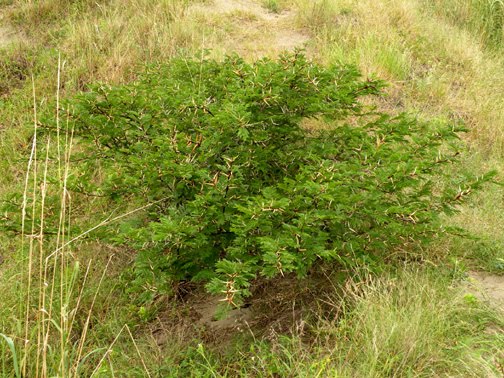 Bullhorn Acacia (Acacia cornigera)
 Yes, the thorns really do resemble a bull's horns.
 Pseudomyrmex ferruginea
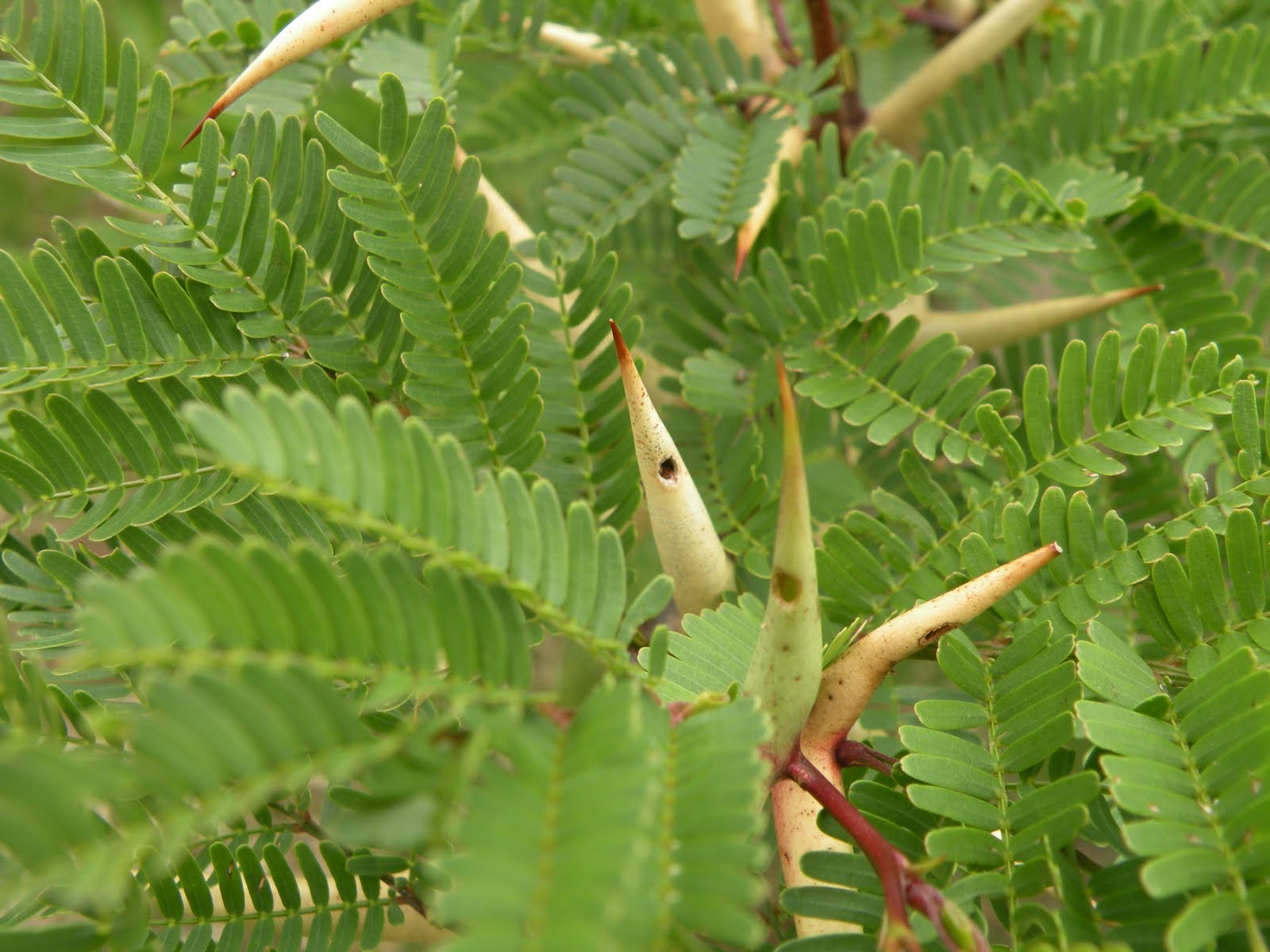 This hollowed-out thorn contained an active ant nest
 Pseudomyrmex harvesting Beltian bodies
 Foliar Nectary